

Enrol In Our Earwax Removal Course UK
Ear care service across the UK have changed massively over the last few years. More patients are actively searching for safe and professional earwax removal
Written by: Jayshree
Reviewed by: Harriet Varney

A structured earwax microsuction training course gives you both knowledge and hands-on ability. You do not sit through theory alone. You learn how to assess, treat, and manage patients in a safe and controlled way.
You start with a clear understanding of the ear. This forms the base for safe practice. You cover ear anatomy and physiology in detail, so you know how sound travels and how each part of the ear responds during treatment. This helps you avoid errors when working inside a sensitive area. You also learn to recognise common ear conditions. This includes impacted wax, infections, inflammation, and other abnormalities you may come across in practice. A key part of the theory focuses on contraindications and red flags. You learn when not to proceed, when to stop, and when to refer a patient. This protects both you and the patient and keeps your practice aligned with clinical standards.
Once you understand the theory, you move into practical training. You learn how to handle microsuction equipment correctly. This includes setting up the device, selecting the right suction tips, and maintaining hygiene standards throughout the procedure. Safe wax removal techniques are taught step by step. You learn how to approach different types of , work with precision, and reduce patient discomfort. Patient positioning and communication are also part of the training. You learn how to seat the patient correctly, explain the procedure clearly, and keep them at ease during treatment. This plays a big role in overall patient experience.
Confidence comes from doing, not watching. Many courses include real patient exposure, where you practise under supervision. This gives you a realistic view of how each case differs and how to adapt your approach. You develop decision-making skills in live scenarios. You learn how to assess quickly, choose the right technique, and adjust if the situation changes. You also gain experience in managing different wax types, from soft to heavily impacted. This prepares you for real clinical settings where no two patients present the same way.
Most microsuction training courses run over 1 to 2 days. This allows enough time to cover both theory and practical sessions without rushing the learning process. Some providers offer blended learning, where you complete theory modules online before attending a face-to-face practical session. This helps you arrive prepared and make better use of hands-on time.
Hands-on training remains the most important part and watching videos or attending online sessions alone does not prepare you to work with patients. You need supervised practice to build skill and confidence. Many courses are CPD-accredited, meaning your learning meets recognised professional standards. This adds value to your qualification and supports your ongoing development within healthcare or clinical practice.
Once you complete earwax microsuction training, you receive a certification from the training provider. This confirms you have covered both theory and practical elements required to carry out the procedure safely. Many courses also include CPD accreditation. This means your training meets recognised professional standards and contributes towards your ongoing development. The number of CPD points depends on the course structure and duration.
This qualification allows you to offer removal as a professional service within your scope of practice. For healthcare professionals, this adds a valuable clinical skill. For those entering the field, this opens a clear route into ear care services. Choosing a recognised training provider matters. A well-structured course ensures you receive proper supervision, real patient exposure, and guidance on safe practice. This builds trust in your service and supports long-term success.
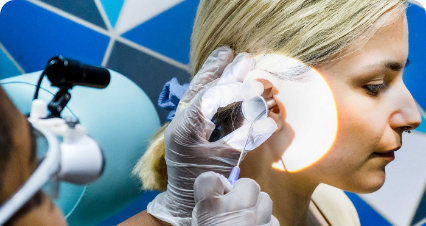
Entry requirements depend on the course provider, but many programmes are designed to support both experienced professionals and beginners. Some level of understanding of the ear helps, especially otoscopy. This involves examining the ear canal and eardrum before any procedure. If you do not have this experience, many providers offer combined courses which include ear anatomy and otoscopy training before microsuction. This pathway makes training accessible while still maintaining safe clinical standards. You build your knowledge step by step rather than skipping essential foundations. Beginners are supported throughout the process. With the right training structure, you learn how to assess, treat, and manage patients with confidence, even if you are new to ear care.
During earwax microsuction training, you work with professional equipment used in real clinical settings. The microsuction machine is the main device. It creates controlled suction to remove while allowing you to work with precision. You also use visual aids such as loupes or a microscope. These help you see clearly inside the ear, which is key to safe and accurate removal.
Suction tips and consumables are introduced during the process. You learn which types to use for different cases and how to handle them correctly. Hygiene and infection control are built into every step. You follow strict protocols for cleaning equipment, using protective measures, and maintaining a safe environment for each patient.
Microsuction is safe when carried out by a trained professional who understands both the procedure and the risks involved. This is why proper earwax microsuction training comes before offering the service to patients. In the UK, there is no single licence tied to microsuction alone, but clear clinical expectations exist. You are expected to work within your scope, follow safe practice guidelines, and maintain high standards of patient care at all times.
Training covers more than the technique. You learn how to take informed consent, explain the procedure clearly, and document each case correctly. This includes recording findings, actions taken, and any follow-up advice given to the patient. Structured training matters because the ear is a sensitive area. Without the right knowledge, there is a risk of injury or missed conditions. A proper course prepares you to work safely, make informed decisions, and know when to stop or refer.
Adding earwax microsuction training to your skillset creates new opportunities across healthcare and private practice. You introduce a high-demand service into your clinic or workplace. Earwax removal is a common need, and access to safe treatment continues to grow across the UK.
This also supports your earning potential. Whether you work independently or within a clinic, offering microsuction adds a new income stream built on a practical, repeat service. Patient care improves as well, and you provide relief from discomfort, hearing issues, and blocked ears in a controlled and safe way. This builds trust and encourages long-term patient relationships. The demand for trained professionals remains steady. With more people seeking private ear care services, those with the right training are in a strong position to grow within this space.
The quality of your training shapes how confident and capable you feel in practice. Choosing the right provider makes a clear difference. Look for courses that include hands-on training with real patients. This gives you practical experience and prepares you for real scenarios rather than controlled demonstrations. Qualified trainers are essential. Learning from experienced audiologists or ear care professionals ensures you follow safe and proven methods.
Ongoing support adds value beyond the course itself. Access to guidance after training helps you build confidence as you start treating patients. Equipment guidance is also important. You need to understand what to use, how to maintain it, and how to set up your workspace correctly. Healthcare Professional Institute (HCPI) follows this approach. Training is led by experienced clinicians, with a strong focus on real patient practice and continued support after completion.
Starting something new in clinical practice can feel like a big step, but the right training makes the process clear and manageable. At Healthcare Professional Institute, microsuction training is designed to give you both knowledge and hands-on experience. You work with real patients under supervision, so you understand how each case differs and how to respond safely.
Courses are led by experienced professionals who guide you through each stage, from assessment to treatment. You do not leave with theory alone, you leave with practical skills you can apply in real settings, and our support continues even after your training. Whether you need advice on equipment, setup, or early cases, guidance remains available as you build your confidence. If you are ready to step into ear care or expand your current services, this is a structured and reliable way to begin.
A microsuction course is a structured training programme that teaches you how to remove safely using a clinical suction device. Earwax microsuction training includes both theory and hands-on practice, so you learn to assess the ear, perform the procedure, and manage patients safely and in a controlled manner.
The training is clear and step-by-step, so most learners find it manageable with the right guidance. You build knowledge first, then move into practical sessions under supervision. Confidence develops through practice, not pressure, and structured courses support you at each stage.
You start offering microsuction once you complete your training and feel confident working within your scope of practice. Many learners begin soon after finishing a hands-on course, especially when they have trained with real patients and understand safe procedures, consent, and documentation.
Not always, many courses accept beginners, but you need proper training before treating patients. Some providers offer combined courses that include ear anatomy and otoscopy, which helps you build the foundation required to practise safely.
Microsuction is widely preferred in modern practice because it allows direct visual access inside the ear. This improves accuracy and reduces risk compared to syringing, which uses water and carries a higher chance of discomfort or complications if not performed correctly.
Ear care service across the UK have changed massively over the last few years. More patients are actively searching for safe and professional earwax removal

A microsuction course teaches you how to remove earwax safely using a clinical suction device, with clear visual access to the inside of the ear.